What makes this tournament different?
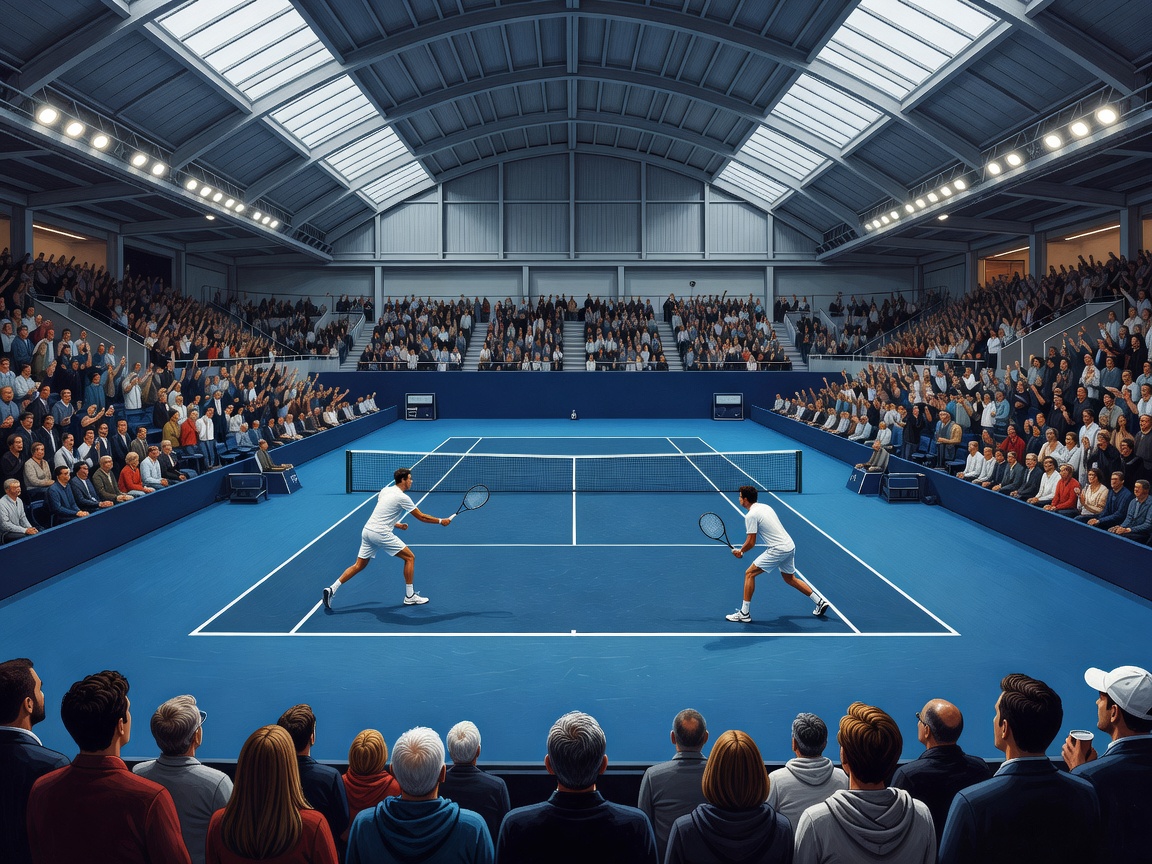
Indoor tennis strips away wind and sun, leaving a hard-edged conversation between serve, return, movement and court speed. The Paris Masters sits near the end of the ATP calendar, so its draw can carry implications for the season-ending ATP Finals. Those implications depend on live standings, however, and should be checked through the ATP rather than assumed months ahead.
The event’s Paris setting is stable; operational details are not. Tournament venues, session structures and access arrangements can change between editions. Use the Paris Masters and ATP websites for the announced venue, draw, order of play and ticket terms applicable to your visit.
Should you choose an early round or the weekend?
Early rounds offer volume. A ticket may provide a broad sweep of singles and doubles, and the day can shift rapidly from established names to unfamiliar match-ups. The trade-off is uncertainty: the draw and order of play determine who appears, while withdrawals can alter the bill.
Quarter-finals and semi-finals compress the field. The tennis carries more immediate consequence, but there are fewer matches and tickets may be harder to obtain. A final offers one clean dramatic arc, though it is a poor choice if your priority is seeing several different playing styles. Choose by format, not by guessing which player will survive the draw.
What does a session ticket mean?
Day and evening sessions are separate where the organiser structures them that way. Read the ticket description for admission time, included courts and re-entry conditions. An evening ticket should not be treated as access to the afternoon programme, and a long day schedule can overrun without granting automatic access to a separately ticketed session.
The order of play is normally published close to the day because it depends on completed matches. Keep notifications or the official schedule within reach, but remember that “not before” is a lower boundary rather than a guaranteed start. Tennis proceeds at the pace of tennis, an institution famously unmoved by dinner reservations.
Where is the best view?
- Behind the baseline: the cleanest reading of spin, depth and tactical geometry. The ball’s lateral movement appears narrower.
- Near a sideline: a sharper sense of pace and net clearance, with more head-turning during long rallies.
- Lower seating: physical immediacy and sound, sometimes with a flatter view across the far court.
- Upper seating: a complete tactical picture, usually better for following patterns than facial detail.
Check the venue plan for railings, camera positions and accessible routes. Seat-category names are commercial labels, not universal descriptions of sightline quality.
How should you plan the Paris journey?
Begin with the venue named by the tournament, then use Île-de-France Mobilités or the relevant official transport operator to map the final leg. Paris journeys that look short can involve long interchanges, and the end of an evening session is not a fixed moment. Avoid a last train that leaves no margin for a deciding set.
Security screening may limit bag size and permitted items. Indoor venues can feel warm once full, while the walk outside may be cold or wet, so layers make more sense than one heavy coat. Store luggage away from the venue unless the organiser expressly offers facilities.
What should you check before leaving?
Confirm the ticket is in the required format, the session has not changed, and the venue’s prohibited-items list is understood. Download the ticket where permitted, record the entrance named on it and note the route back to your accommodation. If you need step-free travel, check both venue access and the working status of lifts on the transport network.
Once inside, settle into the rhythm. Shoes squeak; the scoreboard glows; a serve cracks through the darkened bowl. The draw supplies the names, but the pleasure lies in watching a match reveal its shape point by point.